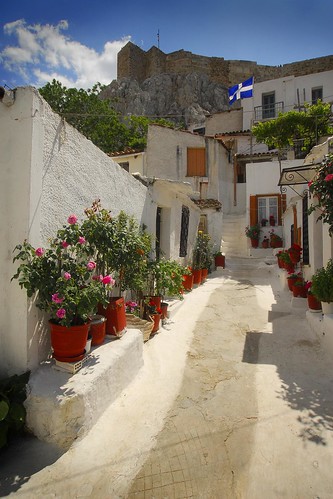
In the shadow of the Acropolis, the Plaka is the oldest section of Athens. It is a gloriously exotic labyrinth of alleys, winding streets and stairs, lined with 19th century neo-classical houses and mansions with beautifully decorated tiled roofs. Plaka district is almost completely pedestrianised and contains the famous flea market around
Monastiraki Square, ancient sites and small museums of traditional and popular culture. Everywhere you look in the Plaka there is evidence of some past civilization, Greek, Roman or Ottoman Turkish. Amidst the history is a colourful medley of restaurants, jewellery stores, tourist shops, cafes, musicians, flower sellers, photographers, bead-sellers and people who write name on a grain of rice. But it is not only tourists who favour it, Greeks also hang out here. In Athens, it is the best place to go on a sunny afternoon to sit on one of the many pavement cafes and see the world go by.
There are two main streets: Kydatheneon and Adrianou. Kydatheneon begins at Nikis street, which is one block down from Syntagma Square. Adrianou begins in the Monastiraki flea market but disappears in the Roman Agora before reappearing behind the wall of Hadrian's Library and Plaka Square. Adrianou and Kydatheneon connect about a quarter of a mile up. Once you know these two streets you can wander around and always find your way back.
I found Matt Barretts website the best for understanding Plaka. Its highly informative and includes all that you need to know about, from Jewellery stores for buying 22k gold; shopping for Olympic paraphernalia; institution called Remember; visited by rock stars, actors, fashion designers and models; to more ordinary information about Cafes and the oldest distillery in Athens. Visit
http://www.athensguide.com/plaka.html and it will seem that you have just come back from Plaka
Buying the shiny - Gold: It's not the gold souk of Dubai but it can be interesting for Europe where 22k is not common. If you are looking for craftsmanship, keep an eye out for artist owned jewellery stores. They make their own pieces rather than buying it bulk from a factory. Most of the shops deal with 22K gold in a variety of styles, including ancient Greek designs or exact copies.
Monastiraki: Placed under the shadow of Acropolis it is f

amou
s for the flea market and is best in early Sunday mornings before the crowd descends and cafes get overcrowded.
Much of the flea market is but a collection of small shops of which most of them are tourist shops with the same stuff you will find across Plaka. But on Sundays it is a flea market with people selling anything from antiques to useless junk. To reach it from Syntagma walk down Metropolitan street, past the Cathedral and the marble square. This is where Pondrossou Street begins which is the high end section of Monastiraki. From Plaka, near the end of Adrianou Street there is a small square dominated by touristy restaurants and cafes. Walk through it till you reach Hadrian's Wall. Turn right and then left, down the tiny Pondroussou Street. You reach the Monastiraki Flea-Market.
Monuments: Overlooking Monastiraki square, and across the street from the metro station is the restored Turkish Mosque housing the acclaimed collection of ceramics of The Greek Folk Art Museum. Right next door are the large columns and ruins of the Roman Emperor Hadrian's Library and the Roman Agora. The entrance to the Ancient Agora is about half way down the block on the left.
- Mosque of Mehmet the Conqueror: Built to commemorate the visit of Sultan Mehmet around 1458.
- Medrese: Considered a cursed place by the Athenians it was originally a theological school. During the War of Independence the Turks used it as a prison and a tree for hanging Greek prisoners. In 1919 the tree was struck by lightning, the building was later demolished and now only the door remains.
- The Roman Agora: Also known as the ‘Market of Caesar and Augustus’ is located on the north side of the Acropolis, and within a short distance of the Greek Agora, with which it was connected by a paved street. An inscription mentions that Julius Caesar and Augustus provided the funds for its construction in the 1st century B.C. The Roman Agora consists of a large, open-air courtyard surrounded by colonnades on all four sides. On the eastern side, there were also a series of shops. On the southern side was a fountain. The main entrance was on the west (Gate of Athena Archegetis), and there was a second entrance on the east, leading up to a public latrine and the ‘Tower of the Winds’. The Roman Agora apparently became the main market of the city, taking over many of the commercial functions of the Greek Agora.
- Tower of the Winds: Also known as the ‘Tower of the Winds’ because of the personifications of the eight winds carved on the eight sides of the building, it is a tall, octagonal building immediately east of the Roman Agora, designed by the famous astronomer (Andronikos of Kyrrhos) as a water clock on the inside, sundial on the outside, and weather vane on the top.
- Monument to Lysikrates: Built in 334 BC by Lysikrates, to commemorate the victory of the annual dramatic festival at the theater of Dionysos
- Library of Hadrian: Built by the Roman emperor Hadrian it is a large, square, walled enclosure with an entrance on the west, located immediately north of the Roman Agora. Inside the complex there was an open air courtyard, with a central pool and garden, surrounded by columns. The eastern end had series of rooms where books were stored and served as reading rooms and lecture halls. Archaeologists note that it was more than a library. It provided the people of Athens with a public square with a garden and pool and a cultural centre that contained works of art, a library, and lecture halls.
Museums & Galleries (in Plaka): There are a few galleries and several museums here out of which the following are noteworthy
- Hellenic Children's Museum: It can be a very enjoyable educational experience for the young. It is a space designed specially to meet the needs and abilities of children and to support the parents and the teachers who contribute to their development.
- The Music Museum: A 5,000 volume library, it is one of the most important musical collections in Europe. The museum has 167 Greek stringed instruments and an endless selection of all other types of musical instruments. For more information visit: http://www.greecetravel.com/musicmuseum/index.html
- The Greek Folk Art Museum: It’s collections include embroideries, wood carvings, jewellery, and other traditional folk art. The highly acclaimed collection of ceramics is housed in a beautifully renovated former mosque at 1 Areos Street on Monastiriki Square. For more information visit: http://www.athensinfoguide.com/The%20Greek%20Folk%20Art%20Museum
- Frissiras Museum of Contemporary Greek and European Painting: It is a private museum dedicated to modern art in the heart of Plaka. There are some 3,000 paintings and sculptures on display and has works of some of the most renowned Greek artists such as Tsoklis, Moralis, Tetsis, Kessanlis and Psychopedis. European artists represented at the museum include Paladino, Blake and Adami amongst others. For more visit: http://www.frissirasmuseum.com/en/
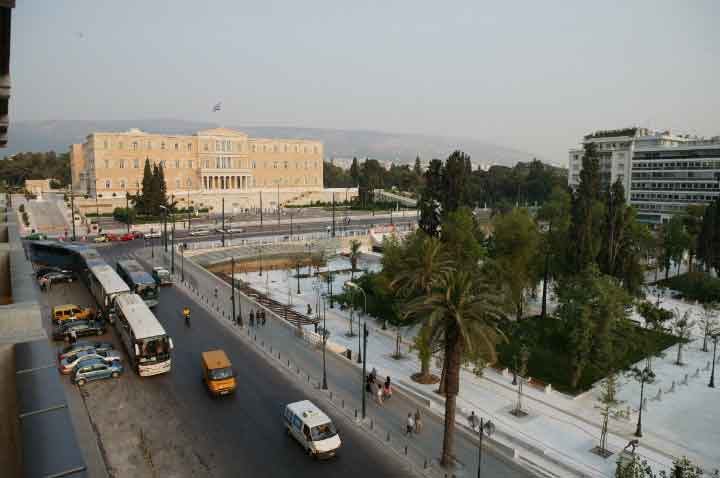 Syntagma Square
  s proclaimed by a reluctant King Otto from a palace balcony in 1843. This palace on the eastern side of the square, is now, the Greek Parliament and is guarded by kilted and pom-pommed soldiers - the evzones (ev-zone-ees). Every hour, the changing of the guard ceremony, performed by the Presidential Guard, is conducted in front of the ‘Tomb of the Unknown Soldier’ on the area between the Square and Parliament. On Sundays and official holidays, the ceremonial changing of the guard takes place with an army band and the majority of the 120 Evzones present at 11am. The Parliament building is surrounded by the extensive National Gardens, which are open to the public.
 s proclaimed by a reluctant King Otto from a palace balcony in 1843. This palace on the eastern side of the square, is now, the Greek Parliament and is guarded by kilted and pom-pommed soldiers - the evzones (ev-zone-ees). Every hour, the changing of the guard ceremony, performed by the Presidential Guard, is conducted in front of the ‘Tomb of the Unknown Soldier’ on the area between the Square and Parliament. On Sundays and official holidays, the ceremonial changing of the guard takes place with an army band and the majority of the 120 Evzones present at 11am. The Parliament building is surrounded by the extensive National Gardens, which are open to the public.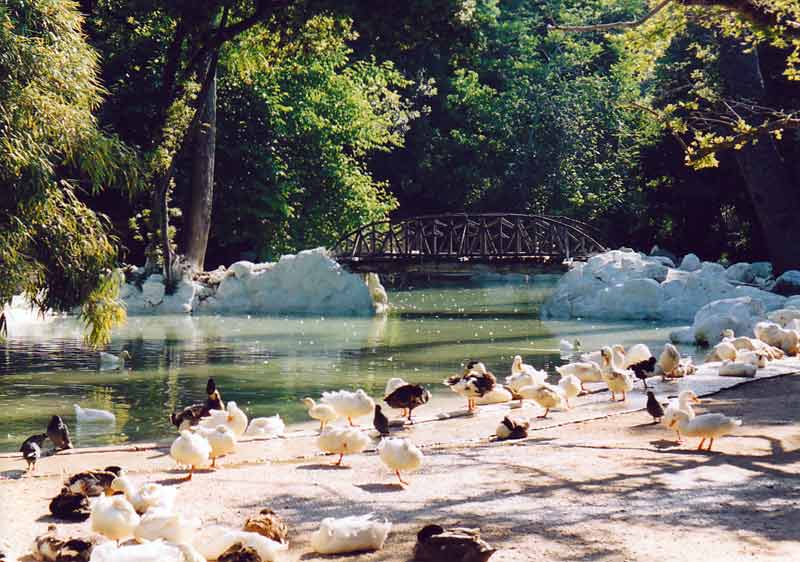

 Kolonaki




 Posts
Posts