Showing posts with label Thessaly. Show all posts

Wednesday, 30 September 2009

Lake Plastiras - Thessaly, Greece


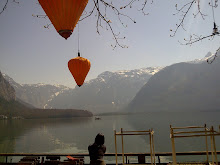
Set at an altitude of about 800 meters in the Agrafa mountain range, the man-made Lake Plastiras and its surrounding area is offers spectacular natural beauty and magnificent views.

Outdoors Activities:
It offers you the opportunity to walk, drive or bike along fir, oak and chestnut trees, down shady lanes with openings to views of immense height and the vast plains below. Fishing, sailing, kayaking, river rafting, hiking, horseback riding, mountain climbing, cross country skiing and jeep tours are other options available.

There are several small villages surrounding the lake. The villages of Kryoneri and Kalivia are well developed for tourism and here you will find hiking tracks, hotels, places to rent sports equipments, organized outdoor areas and the beaches of the lake. The tourist haven and best-known village, Neochori, is worth visiting as it was built on a slope and offers the best views of the lake.
You can buy local products (like honey, spoon sweets, frumenty, garden products, wine, raki and more) from the producers of the region along the road.

Important monuments and places of interest in the wider region includes the Monastery of Korona, Pelekiti and Petra, and the Gaki and the Kaimakia Caves.

Tuesday, 29 September 2009

Mount Pelion and the Pelion Peninsula, (Thessaly Greece)

PELION / PILO/PILIO/PELIO/PILION

The verdant Pelion peninsula with its snow capped mountain, great stretches of sandy beaches and green blue seas, is situated in the prefecture of Magnesia in Thessaly, Central Greece.

Scattered across the Peninsula are around 70 villages, from the famous mountainous villages of Tsagarada, Portaria and Zagora, to the beautiful coastal resorts of Kala Nera, Milina and Platanias and can be toured year round.

Its beaches are spread around the Pagasitic Gulf and Aegean Sea and are good for bathing, watersports or simply lazing. Summer is relatively cooler, especially in the mountains whilst in winter; it becomes a good destination for skiing

Ski Centre of Mount Pelion
Agriolefkes on Mount Pelion (2km from the mountainous village of Hania, 12km from the village of Portaria, and 27km from the city of Volos) is one of the first ski centres to operate in Greece The four slopes of "Thetis", "Falconera", "Panorama" and the "Amateurs" slope all combine to make a total length of 5000m. The centre is very popular during the winter months and apart from skiing, other winter activities include snowboarding and mountain artillery ski. The centre provides other facilities such as a cafeteria, parking as well as accommodation. However for a better choice in accommodation the nearby villages of Hania, Portaria and Makrinitsa should be explored.

Beaches in Pelion Greece:
With both the Aegean Sea on the eastern coast and the Pagsitic Gulf on the southern part of the peninsula it offers some great sand and white pebble beaches and ‘Blue Flag’ coastal resorts.

For more information on Pelion Beaches


Popular Beaches on the Pagasitic Gulf:
  1. Kato Lehonia Beach More information;
  2. Kala Nera Beach: ‘Blue Flag,’ More information Hotels and Accommodation in Kala Nera;
  3. Boufa Beach: the largest and the most popular beach in Pelion situated between the villages of Kala Nera and Afissos
  4. Afissos Beach: soft sand beaches. More information Hotels and Accommodation in Afissos

Popular Beach on the Aegean Sea:

  1. Mikro Beach: one of the most beautiful and very popular during summer. More information Hotels and Accommodation in Mikro;
  2. Kastri Beach: very popular with windsurfers. More information
  3. Paltsi (Agios Konstantinos) Beach: More information Hotels and Accommodation in Paltsi;
  4. Potistika Beach: can be good for a peaceful and relaxing holiday. More information Hotels and Accommodation in Potistika;
  5. Milopotamos Beach ( Tsagarada ): More information Hotels and Accommodation in Tsagarada;
  6. Fakistra Beach ( Tsagarada ): The beach is surrounded by large rocks and greenery; Papa Nero Beach: a lovely sandy one, where the mountains stretch down to the sea. More information;
  7. Agios Ioannis Beach: popular holiday resort in Pelion. More information Hotels and Accommodation in Agios Ioannis;
  8. Agioi Saranta Beach: More information;
  9. Horefto Beach: lush suuroundings and a tranquil environment More information
Main City, Volos:
The capital city of the region of Magnesia is built at the foot of the mountain of Pelion. The ancient city "Dimitrias", established in the 3rd century BC by the Macedonian king "Dimitrios the Sieger", is situated a little further from modern day Volos. Of the important sites, the most important are The Athanassakeion Archaeological Museum and the archaeological sites of Sesklo, Dimini and Fthiotides Thives. More Information on Volos

Museums and Archaeological sites in Pelion Greece

  1. The Athanassakeion Archaeological Museum, Volos, is the most important museum in the region. The Museum houses a selection of interesting artefacts and various objects of antiquity. Visitors to the museum will also see a great collection from the Paleolithic and Neolithic Age. The collections include a collection of Neolithic figurines, clay models and vases. Gold Jewellery and coins from both Thessaly and other parts of the ancient Greek world are also on display.
    Address: 1 Athanasaki Street in Volos. Telephone ( +30 ) 24210 25285. Opening hours for the museum are Tuesday-Sunday: 08.30-15.00. The museum is closed on Mondays. Contact the museum to confirm that opening times if you are planning a visit, as they are subject to change.

  2. The Museum of Art Folklore - Makrinitsa, Pelion

  3. The Greek Museum (Old school of "Rigas”) - Zagora, Pelion
  4. The Aggelinis Museum - Horto, Pelion

  5. The Old Library - Milies, Pelion

Archaeological Sites around Pelion:

There are several ancient archaeological sites around Volos and Pelion including those of Dimini (Neolithic & a very important Mycenaean Settlement, later identified as ancient Iolkos, the city of Jason), Sesklo (one of the main Neolithic Settlements in Greece, as well as of Europe) and Fthiotides Thebes (Late Roman to Early Christian years).

We found the following very interesting Travel Routes on AroundPelion.com
  1. Travel Route 1 - Starting from Afissos village, and passing through various villages ending at Trikeri village. The Complete Travel Route 1
  2. Travel Route 2 - Starting from Afissos village, and passing through various villages ending at Platania village. The Complete Travel Route 2

  3. Travel Route 3 - Starting and returning to Afissos village, passing through Milies, Vizitsa and Ano Lehonia. The Complete Travel Route 3
  4. Travel Route 4 - Starting and returning to Afissos village, passing through Tsagarada, Makrinitsa and Volos. The Complete Travel Route - 4

Suggested Links for more info on Pelion
More Information on Travelling to Pelion; More Information on Travelling around Pelion
Pelion Hotels Accommodation; Camping in Pelion Greece; Photo Gallery

Surreal Monasteries of Meteora, (Thessaly, Greece)

One of the most visually stunning and spectacular places in Greece is the designated UNESCO World Heritage Site of Meteora. I recommend a visit to Meteora to experience the surreal marvels of man and nature, if not for, spiritual, religious, historic & academic interests.

In the middle of northern Greece, at the western region of the Thessaly plain, beside the Pindhos Mountains, sandstone rocks formed 60 million years ago rise from the ground, atop which are perched the monasteries of Meteora. The rocks themselves are so overwhelming that it takes a while to notice the monasteries. Gloriously incongruous at noon, silhouetted against the setting sun, eerie and huge in the floodlights at night, they're an awesome sight. Featured in a James Bond movie, the rocks are an adrenaline booster to both, professional and amateur rock-climbers.

Originally the monks, seeking solitude, settled in the caves within the rocks, a thousand years ago. But Turkish rule, forced them to climb higher and higher up the sheer rock face, till they had built the monasteries on virtually inaccessible peaks. The monasteries embody the sheer tenacity of the monks and exemplify their architectural feat in building complex structures at a time, when access was limited to ropes, ladders and nets. During the Turkish occupation Greek culture and traditions were kept alive in these monasteries. It attracted not only the pilgrims, but also the philosophers, poets, painters and the intellectuals of Greece.

Today of the two dozen monasteries, only six are active. They are full with religious treasures, wall paintings, icons and libraries rich in old manuscripts.

Agios Nikolaos (St, Nicholas) Anapafsas: built in the 16th Century by Dionysius; it features splendid frescoes by the 16th-century Cretan painter & monk Theophanes.
Agia Triada (Holy Trinity): founded by the monk Dometius in the 15th century, it is perched atop a slender pinnacle, only accessible by 140 steep steps. Its solitariness is further enhanced by the only two resident monks. The remoteness of its spectacular location was famously used for the James Bond film ‘For Your Eyes Only’.

Roussanou Monastery: founded in 1545 by two brothers Joasaph and Maximos, on the ruins of an even older church. It contains outstanding wall paintings, wood & panel icons and icon stands.

Agios Stephanos (St. Stephen): an active nunnery with an important relic: the head of St. Charalambos, whose powers include warding off illness. It has uninterrupted view of the plain towards Kalambaka.
Great Meteoron: built upon the highest rock, it is the best known Meteora Monastery. The Serbian Emperor Symeon Uros became a monk and donated his entire wealth to it, thereby making it the richest and most powerful of all the monasteries. It contains some of the most gruesome frescoes of Early Christian sufferings at the hands of the Romans, as well as, beautiful wall paintings and post Byzantine Mural art.

Varlaam Monastery founded in 1517 by Theophanis and Nektarios Apsaradas it houses an important collection of relics, intricately carved wooden crosses, icons, embroidered epitaphoi and many other ecliastical treasures. It also contains frescos by the well-known post Byzantine iconographer Frangos Katelanos.

More details: Greeklandscapes Meteora; Wikipedia Meteora Monastery; meteora-greece.info; Greek Official Website; greecetaxi.gr/meteora

Monastery Open Timings

Other Practical Info:
There is an entry fee to enter each of the monasteries and as prevalent in most of the Greek monasteries proper attire is required. Women in knee length skirts and arms fully covered, men in full length trousers and shirts.
All the monasteries are connected by a series of path works and if you begin early you can cover all in one day. They are also connected by roads so if you are coming by car and don't have all day to wander around you can also get close enough and then continue on foot. The Lonely Planet Guide to Greece is handy when it comes to instructions on how to get from one monastery to another but don’t panic if you aren’t carrying one, local guidebooks are just as useful.

Other Attractions /Activities:

Kastraki is a popular destination for rock climbers and walkers
Adventure Sports: Meteora is also a great place to go rock climbing and Trekking. Hellas has a rock climbing school for beginners as well as programs in the area for beginners and advanced climbers. They also organize ultralight flights, paragliding and parachuting for all those who like to live on the edge.

In Kalambaka: Two sights of importance: The Cathedral of the Dormition of the Virgin & The Cave of Theopetra which has revealed signs of being inhabited since the Middle Palaeolithic Period and therefore demonstrates the transition from the Palaeolithic to the Neolithic way of life in Greece.

Many people do Delphi in combination with Meteora.

Accommodation:
Most people stay at the two closest villages to Meteora are Kalambaka and Kastraki each within 15mins walking distance of each other. For more details: kalampaka.com; hotelsintrikala.gr; Matt Barrett's Hotel Guide
How to Reach

By Bus: There are several connections from Athens to Trikala and then further to Kalambaka.

By Tour: Meteora is on the tour circuit. Several tour companies offer a day or more combined with other sites. Do check Dolphin Hellas Travel, Fantasy Travel, Viator for more details

Rent A Car - Swift in Athens is recommended by Matt Barrett for good rates, a Plaka location and the added benefit of them picking you up from the airport or your hotel and driving you to the National Road so that you don't have to negotiate with the crazy Athens traffic. Check www.greektravel.com/swift. Off course there are a host of other options that can be explored online (travelsupermarket.com, europcar.com, etc)

By Train
From Athens take the train to Volos. From there take the connecting to Kalambaka.
From Thessaloniki - There is a connection to and fro from here

By Taxi: You can travel by Taxi at your own comfort or pace, for further details click on http://www.greecetaxi.gr/. Or you can travel with George the Famous Taxi Driver in an air-conditioned Mercedes. He even handles the hotel arrangements and you can combine it with other sites or check

Exploring Thessaly, Greece (Mt Pelion / Pilio, Monasteries of Meteora, Lake Plastira)

Located above the region of Central Greece is the picturesque prefecture of Thessaly (Thessalia). Bordering with the Aegean Sea on the east it offers a varied landscape abound with natural beauty and makes a perfect round the year holiday destination. Easily accessible from both North and South Greece the destinations worth visiting would include:

Mount Pelion / Pilio (County of Magnesia) - Offers the perfect combination of sea and mountain. During the summer season, the beautiful beaches all around the coast are full of people enjoying the summer sun and sea. During the winter season, visitors descend onto Mount Pelion for its fantastic ski centre. Other winter sports and activities also take place here.


Cliff Hanging Monasteries of Meteora (County of Trikala) – An out of the world experience, the stunning monasteries are located right at the top the gigantic rocks and needs to be seen to be believed.

Lake Plastira (County of Trikala) - The area is one of immense natural beauty, and is a place that visitors will instantly fall in love with.


Check my other blogs for more information