Showing posts with label Skiing. Show all posts

Tuesday, 29 September 2009

Mount Pelion and the Pelion Peninsula, (Thessaly Greece)

PELION / PILO/PILIO/PELIO/PILION

The verdant Pelion peninsula with its snow capped mountain, great stretches of sandy beaches and green blue seas, is situated in the prefecture of Magnesia in Thessaly, Central Greece.

Scattered across the Peninsula are around 70 villages, from the famous mountainous villages of Tsagarada, Portaria and Zagora, to the beautiful coastal resorts of Kala Nera, Milina and Platanias and can be toured year round.

Its beaches are spread around the Pagasitic Gulf and Aegean Sea and are good for bathing, watersports or simply lazing. Summer is relatively cooler, especially in the mountains whilst in winter; it becomes a good destination for skiing

Ski Centre of Mount Pelion
Agriolefkes on Mount Pelion (2km from the mountainous village of Hania, 12km from the village of Portaria, and 27km from the city of Volos) is one of the first ski centres to operate in Greece The four slopes of "Thetis", "Falconera", "Panorama" and the "Amateurs" slope all combine to make a total length of 5000m. The centre is very popular during the winter months and apart from skiing, other winter activities include snowboarding and mountain artillery ski. The centre provides other facilities such as a cafeteria, parking as well as accommodation. However for a better choice in accommodation the nearby villages of Hania, Portaria and Makrinitsa should be explored.

Beaches in Pelion Greece:
With both the Aegean Sea on the eastern coast and the Pagsitic Gulf on the southern part of the peninsula it offers some great sand and white pebble beaches and ‘Blue Flag’ coastal resorts.

For more information on Pelion Beaches


Popular Beaches on the Pagasitic Gulf:
  1. Kato Lehonia Beach More information;
  2. Kala Nera Beach: ‘Blue Flag,’ More information Hotels and Accommodation in Kala Nera;
  3. Boufa Beach: the largest and the most popular beach in Pelion situated between the villages of Kala Nera and Afissos
  4. Afissos Beach: soft sand beaches. More information Hotels and Accommodation in Afissos

Popular Beach on the Aegean Sea:

  1. Mikro Beach: one of the most beautiful and very popular during summer. More information Hotels and Accommodation in Mikro;
  2. Kastri Beach: very popular with windsurfers. More information
  3. Paltsi (Agios Konstantinos) Beach: More information Hotels and Accommodation in Paltsi;
  4. Potistika Beach: can be good for a peaceful and relaxing holiday. More information Hotels and Accommodation in Potistika;
  5. Milopotamos Beach ( Tsagarada ): More information Hotels and Accommodation in Tsagarada;
  6. Fakistra Beach ( Tsagarada ): The beach is surrounded by large rocks and greenery; Papa Nero Beach: a lovely sandy one, where the mountains stretch down to the sea. More information;
  7. Agios Ioannis Beach: popular holiday resort in Pelion. More information Hotels and Accommodation in Agios Ioannis;
  8. Agioi Saranta Beach: More information;
  9. Horefto Beach: lush suuroundings and a tranquil environment More information
Main City, Volos:
The capital city of the region of Magnesia is built at the foot of the mountain of Pelion. The ancient city "Dimitrias", established in the 3rd century BC by the Macedonian king "Dimitrios the Sieger", is situated a little further from modern day Volos. Of the important sites, the most important are The Athanassakeion Archaeological Museum and the archaeological sites of Sesklo, Dimini and Fthiotides Thives. More Information on Volos

Museums and Archaeological sites in Pelion Greece

  1. The Athanassakeion Archaeological Museum, Volos, is the most important museum in the region. The Museum houses a selection of interesting artefacts and various objects of antiquity. Visitors to the museum will also see a great collection from the Paleolithic and Neolithic Age. The collections include a collection of Neolithic figurines, clay models and vases. Gold Jewellery and coins from both Thessaly and other parts of the ancient Greek world are also on display.
    Address: 1 Athanasaki Street in Volos. Telephone ( +30 ) 24210 25285. Opening hours for the museum are Tuesday-Sunday: 08.30-15.00. The museum is closed on Mondays. Contact the museum to confirm that opening times if you are planning a visit, as they are subject to change.

  2. The Museum of Art Folklore - Makrinitsa, Pelion

  3. The Greek Museum (Old school of "Rigas”) - Zagora, Pelion
  4. The Aggelinis Museum - Horto, Pelion

  5. The Old Library - Milies, Pelion

Archaeological Sites around Pelion:

There are several ancient archaeological sites around Volos and Pelion including those of Dimini (Neolithic & a very important Mycenaean Settlement, later identified as ancient Iolkos, the city of Jason), Sesklo (one of the main Neolithic Settlements in Greece, as well as of Europe) and Fthiotides Thebes (Late Roman to Early Christian years).

We found the following very interesting Travel Routes on AroundPelion.com
  1. Travel Route 1 - Starting from Afissos village, and passing through various villages ending at Trikeri village. The Complete Travel Route 1
  2. Travel Route 2 - Starting from Afissos village, and passing through various villages ending at Platania village. The Complete Travel Route 2

  3. Travel Route 3 - Starting and returning to Afissos village, passing through Milies, Vizitsa and Ano Lehonia. The Complete Travel Route 3
  4. Travel Route 4 - Starting and returning to Afissos village, passing through Tsagarada, Makrinitsa and Volos. The Complete Travel Route - 4

Suggested Links for more info on Pelion
More Information on Travelling to Pelion; More Information on Travelling around Pelion
Pelion Hotels Accommodation; Camping in Pelion Greece; Photo Gallery

Exploring Thessaly, Greece (Mt Pelion / Pilio, Monasteries of Meteora, Lake Plastira)

Located above the region of Central Greece is the picturesque prefecture of Thessaly (Thessalia). Bordering with the Aegean Sea on the east it offers a varied landscape abound with natural beauty and makes a perfect round the year holiday destination. Easily accessible from both North and South Greece the destinations worth visiting would include:

Mount Pelion / Pilio (County of Magnesia) - Offers the perfect combination of sea and mountain. During the summer season, the beautiful beaches all around the coast are full of people enjoying the summer sun and sea. During the winter season, visitors descend onto Mount Pelion for its fantastic ski centre. Other winter sports and activities also take place here.


Cliff Hanging Monasteries of Meteora (County of Trikala) – An out of the world experience, the stunning monasteries are located right at the top the gigantic rocks and needs to be seen to be believed.

Lake Plastira (County of Trikala) - The area is one of immense natural beauty, and is a place that visitors will instantly fall in love with.


Check my other blogs for more information

Exploring Central Greece - Delphi, Nafpaktos & Mount Parnassos

The must visit in Central Greece would include:

The UNESCO World Heritage Site of Delphi (prefecture of Fokida) - Located amidst a stunning mountainous landscape, the ruins mark the most important sacred site of Ancient Greece. The temple of Delphi is the second most visited tourist attraction in all of Greece, after the Parthenon in Athens and can be reached easily from Athens. Fokida is almost an entirely mountainous area, which makes it a haven for hikers, and those who love adventure and alternative holidays.


The medieval fortress city of Nafpaktos (prefecture of Etoloakarnania)


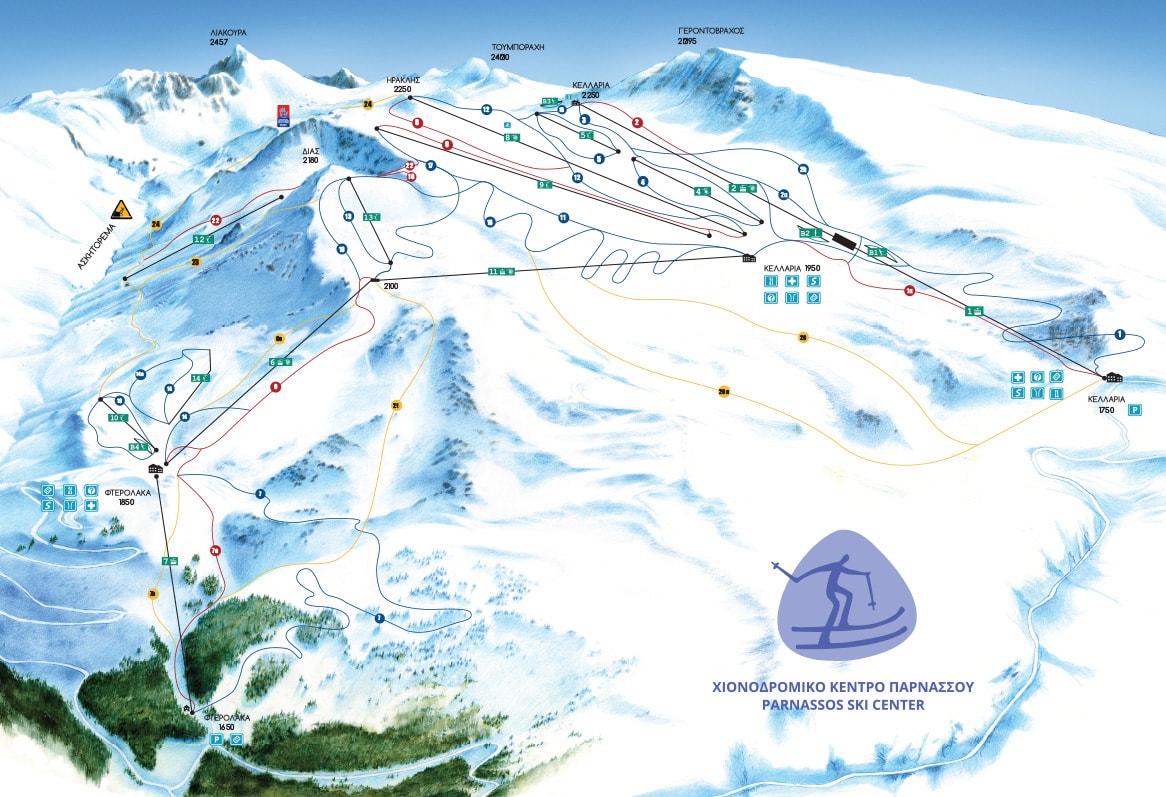
Mount Parnassos, (prefecture of Viotia) - Close to Athens it is a popular winter ski destination.

Check my other blogs for more info on Delphi, Nafpaktos & Mount Parnassos

Kalavrita - A journey through Vouraikos Gorge, The Cave of the Lakes, Ski Tracks & Greek War Monuments - (Peloponnese, Greece)

You can drive all the way up, but it is highly recommended to take the Vouraikos River, Funicular Railway from the coastal town of Diakofto all the way up to Kalavrita.

Built in 1885 by the Italians, the train traverses around 20 Kms on the narrow gauge tracks through a fine gorge, following the stream bed of River Vouriakos, winds up into the mountains through tunnels, past water-falls, along cliffs and through forests of pine and oleander. The hour long journey is one of the most spectacular train rides in the world. If you plan to take this wonderful journey, it is recommended by the Lonely Planet Guide to get first class tickets as those seats have the best view.

There are numerous Hiking Trails in the area. If you want to hike up the challenging Vouraikos Gorge, then you can alight at the small village of Zachlorou. An hour walk from the village of Zachlorou is the spectacular site of The Holy Monastery of Mega Spileo (“Grand Cave”). Built in a giant cave in 326 AD, it is full of beautiful frescoes, mosaic floors and other treasures. You will also be rewarded with a fantastic view of Mount Chelmos, Mount Petruki and the Ladopotamos River. Many people walk down through the gorge to Diakofto.

Post Zachlorou you arrive in Kalavrita.

Of importance are the following monuments:

Around Kalavryta
Kalavrita Ski Center – It is located 14 kms from Kalavrita, complete with modern facilities and recognized as one of the best in Greece.

If you are interested in Greek mythology, an excursion to The Waters of Styx and the Mavroneri Waterfall can be made. This is where Achilles was baptized and achieved immortality, (with the exception of the spot on his heel where his mother held him).

Another place of steeped in mythological references and of great natural beauty is the River Ladonas – Lake Ladonas. Ladonas is one of Ancient Greece’s mythical rivers.

The Holy Monastery of the Assumption of the Virgin of Makellaria – famous for its wonder-working icon of the Virgin. It is a work of art from the Byzantine period, admired by all for its particular feature of giving the impression that wherever you stand the Virgin’s eyes follow you.

The Holy Chapel of Panagia Plataniotissa - the small chapel is tucked inside the hollow of a large plane tree, which can hold as many as 20 people.

There are also several archaeological sites scattered throughout the hills and mountains around Kalavrita including the Archaeological Site of the Ancient City of Klitor; Archaeological Site Of Ano Lousoi; Pafsania’s Vine Branch

The Cave of the Lakes – it is located on the way from Kalavrita to Klitoria at an altitude of 827m.The cave is endowed with a unique geomorphologic character not found anywhere else in the world. 13 lakes are arranged in a cascading format at three different levels inside the cave. The cave is fed by snow melts which are canalised through swallow-holes and underground natural channels. Although the existence of the cave has been known since ancient times, its second level was not discovered until 1964. In the lower level (inaccessible) were found human and animal fossils of Paleontological importance, as well as remnants of pottery dating back to the Neolithic and the early Helladic period. In 1981, the cave was opened to the public. The cave covers an area of 20,000 square meters, of which only 1,980 have been explored and 350 have been arranged for tourist visits. The visitor enters the cave through an artificial tunnel which leads directly to the second floor. There is a metal walkway that follows the string of cascading lakes and climbs through the subterranean passageway complete with magnificent multicoloured stalactites and stalagmites. In winter when the snow melts, the cave is transformed into a subterranean river with natural waterfalls. In the summer months, part of the cave dries up revealing a lace-work of stone-basins and dams of up to 4 m in height. The rest of the cave retains water permanently throughout the year in 13 picturesque lakes.Tours are taken through the cave every half hour or so and the guide speaks in English and Greek. The cave is open to the public all year round; facilities include a waiting room and a tourist kiosk. You are not allowed to take pictures, but the postcards they sell at the kiosk are good enough.

Some interesting links on Kalavrita are: Off-Road Outings By Jeep; en.wikipedia.org/Kalavryta; http://www.kalavrita.gr/DynSITE/?lang=en; Matt Barrett's - Kalavrita

How to Reach

  • By Car: If you drive from Athens, you take the national road that goes south to Corinth and then you follow the signs for Patra. You turn for Kalavrita in the conjunction of Diakofto. The trip will take about 3 hours.

  • By Bus: There are several buses that leave daily from Athens to Kalavryta. More information can be obtained at http://www.ktel.org/. There are also special buses during winter for skiers. The buses live early in the morning from Kifissia, Kalimarmaro, Neo Psichiko and Palaio Faliro.

  • By Train: There is also a rail service to Kalavrita. You go by the regular train to Diakofto and then you change and take the funicular train up till Kalavrita town. The trip from Diakofto to Kalavrita takes almost an hour. It is considered as an amazing trip especially during spring. You will find more information at http://www.ose.gr/

Accommodation: www.kalavrita-hotels.gr/; /www.web-greece.gr/kalavrita; http://www.greekhotels.gr/peloponnese_hotels/ahaia_hotels/kalavryta_hotels.asp;