Showing posts with label Vikos Gorge. Show all posts

Thursday, 1 October 2009

Traversing the Vikos Gorge & discovering Zagoria, (Epirus, Greece)

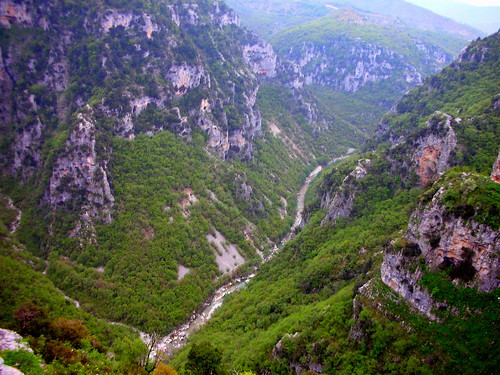
The Zagoria region in the Pindos Mountains is a hidden gem where sleepy villages nestle beneath towering pine-clad peaks, and the heat of the summer is tempered with cool mountain air and dips in natural pools. Even at the height of summer, temperatures are pleasant in the high mountains, while dense forest shades the lower canyons.

A hiking heaven it offers spectacular routes through the deep Vikos Gorge which averages 700 metres in depth and is the second longest in Europe after the much busier Samarian Gorge, Crete.
The 12-kilometer gorge itself can be hiked in two or three parts:
  • Monodendri north to Vikos
  • Vikos to Papingo
  • Monodendri south to Kipi

Highlights of a trek through this region includes the deserted monastery of Agia Paraskevi, perched in an eagle's nest position high over the Canyon; the cobbled streets of tiny rural hamlets with their preserved Zagorian styled old mansions, ancient tracks over elegant stone packhorse bridges, the Vaidomatis River that runs through the gorge and the ascent up to Drakolimni (Dragon Lake) which offers breathtaking views out over the mountains and gorges. However it’s recommended not to try hiking alone in this region as it is very easy to get lost and the gorge is still refuge to many wild animals such as bears, boars and birds of prey. Hence it’s best to engage the services of an experienced guide to hike around the Vikos Gorge.

Most trails up the demanding Gamila Massif (2497 metres) are steep and lengthy. Using the Gamila refuge as a base, day hikes can be made to Drakolimni of Gamila, the peaks of Gamila and Astraka and explore the Mega Lakko Ravine. Arrangements for use of the refuge must be made at the EOS office in Megalo Papingo (Tel. 30-265-3041138). They also provide information and maps.

For more information visit the following links:
Map of Zagori Villages; A Vikos Hike Travelogue complete with pictures of the region
The Daily Traveller - The Grand Canyon of Greece; About Zagori; Matt Barrett's Greece Travel;
HOW TO REACH

By Car - From Athens via Ioannina which is a seven hour drive. take the National Highway to Larissa. An excellent primary road travels west from Larissa to Ioannina via Trikala and over the Katara Pass. This portion is an interesting and scenic drive that passes the famous monasteries of Meteora and through gorgeous mountain landscapes. Most of the access roads to Zagoria are located between Metsovo and Konitsa along the main highway from Ioannina to Kastoria. Past Ioannina, the first villages of the Zagori is only 16 kilometres away. However extreme caution needs to be taken while driving as apart from the mountain road being steep, narrow, and winding, local drivers do drive a bit recklessly around hairpin curves.

By Bus - From Athens to Ioannina post that onward connection to the Zagori villages. Do visit the website for more information.

By Flight – Nearest airport Ioannina which is served by domestic connections including flights from Athens

The Best of Epirus Region, Greece (Vikos Gorge & Zagoria, Metsovo, Ioannina, Dodoni, Nekromanteion


Epirus has the strongest regional identity in mainland Greece, bordering the peripheries of West Macedonia and Thessaly to the east, Central Greece to the south, the Ionian Sea and the Ionian Islands to the west and Albania to the north.

It owes its character to an unrelenting mountainous terrain (Pindus Range), forested gorges & wild rivers. These natural fortifications have been successful in protecting and isolating the region from outside interventions, even to a great extent from the Ottoman Rule. Their roles in ancient Greek affairs were relatively insignificant with only four archaeological sites of any importance, out of which two are isolated Oracles. But the regions attraction lies in its sheer physical beauty with limestone peaks and dense forests which provides an enchanting background to traditional stone built villages and arched packhorse bridges. Areas of interest in this region of Greece would include

Nature Trails

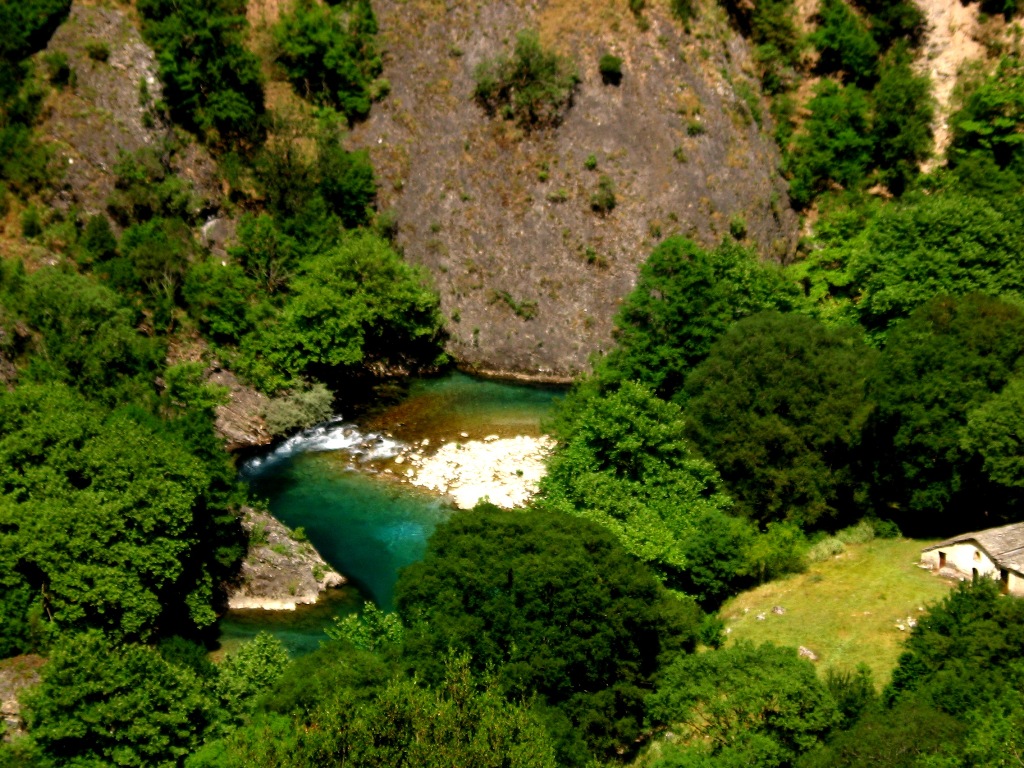
  • Vikos Gorge & Zagoria - The deepest gorge in the world by the Guinness Book of Records, it offers a landscape of awesome beauty, as the walls of the canyon reach at some points the height of 1 kilometre and the crystal clear waters of Voidomatis River run through it in a spectacular route.
  • Up on the mountains of Pindus some 45 picturesque villages called Zagoria or Zagorohoria offer unforgettable images to the visitor: traditional architecture and a unique folkloric character, countless centuries-old bridges and water fountains, cobble-stone meandering streets and passages, stone-built churches and tiny chapels and Mount Tymfi with its highest peak Gamila & Smolikas for the serious and seasoned trekkers.
  • Metsovo (County of Ioannina) - an easily accessible charming village and should be visited if you want to savour the taste of Greek mountain life

Archaeological & Historic Interests

  • Archaeological site of Dodoni Oracle - The oldest Hellenic oracle, dedicated to Zeus and the Mother Goddess. The site also includes an amphitheatre dating to the 3rd century BC.
    Lakeside town of Ioannina - It is the historical, cultural and commercial hub of the Epirus region. It was the capital of the tyrant Ali Pasha. The old town is strewn by the remains of the Ottoman quarters (the mosque, old fortifications) Ottoman-flavored bazaar and inexpensive eateries rimming the lake.

Ancient Nekromanteion, Oracle of the Dead (County of Preveza) - Located on a cliff near the shores of the lake Acherousia, at the junction of the rivers Kokytos and Acheron. According to the ancient Greek mythology, the Acheron river (‘river of woe’) was a branch of the underworld river Styx over which Charon ferried the newly dead souls across into Hades. So it is here, at the Nekromanteion, that the ancients believed were the Gates to the Dead. (Spooky)

Tuesday, 29 September 2009

Hiking in Greece - The Great Outdoors

When to go?
If you want to ensure perfect weather for hiking, the best is to go either between mid-April and mid-June, OR between mid-September and end of October. The summer months may be too hot for some, but if you take it easy and you avoid walking in the middle of the day, you can have a wonderful trekking experience in the summer as well. During the winter, the weather can range from sunny and warm (temperatures may go up to 20 degrees) to freezing and snowing, with rainy days in between.

Where to go?
Anywhere! It simply depends on your inclinations and what else you want to do during your holidays. During the summer, you may prefer the cooler mountains air, and during the winter, island walks can be an almost spiritual experience. But we would recommend a hike through at least one of Greece three famous gorges:
Vikos gorge - Epirus
Lousios gorge - Peloponnese
Samaria gorge - Crete

Check my other blogs for more details on Vikos & Lousios