Showing posts with label Athens. Show all posts

Tuesday, 29 September 2009

Ancient Epidaurus & the Amphitheatre (Peloponnese, Greece)

Located at the eastern end of the Peloponnese, 62 kilometres south of the Corinthian Canal, Epidaurus was an ancient healing as well as a cultural center.

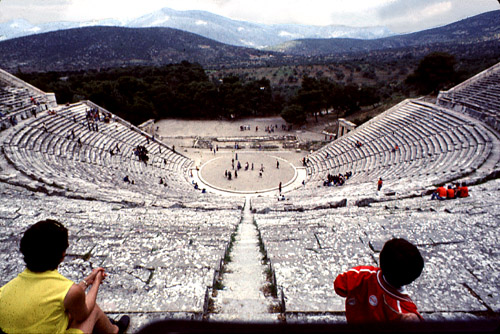
Today its major draw is the almost perfectly preserved Amphitheatre.

The view, aesthetics, and acoustics of the theater are breathtaking. Its awe-inspiring acoustics are built with mathematical precision for the 14,000-seat theatre, 2,500 years ago. If you drop a matchstick in the centre of the original beaten earth stage it can be heard by people sitting in the highest of the 55 tiers. Epidaurus Theatre is a World Heritage Site and is an incredible feat of Greek achievement. It was then used for musical and poetry contests and theatrical performances.

Today, it still continues to amaze and delight audiences with frequent plays, concerts, and festivals, the highlight being the Annual Hellenic Festival held in July and August. Tickets for it can be bought either at the site or at the Athens Festival box office in Stadiou, (the main street connecting Omonia and Syntagma squares Athens). You can purchase a ticket that includes transport to and from Athens which is approximately a two and a half hour bus ride. Watching a Greek Tragedy enacted on the ancient stage from the ancient limestone stone seat is an experience beyond words. It lifts your spirit to the time of the ancients and you share the space with them and live the Greece of antiquity.

The rest of the site requires a little research and imagination to be fully appreciated but the notable ruins include:

The Foundations of the Temple of Asclepius: Greek mythology states that Epidaurus was the birthplace of Asclepius, the god of healing and son of Apollo. The site became one of the most important centres of healing in the ancient world and by the 4th century BC the cult was well established and the sick travelled from far to seek medical and mystical cures at the sanctuary dedicated to Asclepius. Alongside the Temple of Asclepius are the remains of the "Abaton" where patients slept in the hope of receiving a miraculous cure. Another structures, associated with healing is the bee-hive shaped "Tholos" that was once a snake-ridden labyrinth. Mentally ill patients had to crawl through it in darkness in the hope that the shock would bring them into good health!

Sanctuary of Egyptian gods

Sports Stadium

Odeon

Bath Complex

Museum: It displays ancient surgical tools, intricately carved reliefs from the Tholos and stone inscriptions detailing miraculous cures that supposedly took place at the sacred site

For more information visit:
http://www.greeklandscapes.com/greece/epidaurus.html; http://en.wikipedia.org/wiki/Epidaurus; http://www.greatbuildings.com/buildings/Theater_at_Epidauros.html (pictures)

How to Reach:
From Athens by Car: It is on the coach day trip circuit for tourists from Athens. However you can also drive down. Follow the signs to the "Ancient Theater of Epidaurus" which appears at regular internals after Corinth. They assure that you are on the right path because for a couple of hours it seems like a road to nowhere with no sign of life or gas stations.

From Nauplion by Car: Getting to Epidaurus from Nauplion is easier as the road is wider and the gas stations more frequent. Bus tours are also available from here.

By Bus: During festivals, there are also four or five buses that connect Nauplion to Epidaurus’ theatre. The only detail that should be kept in mind is to take only those with the sign indicating the theatre of Epidaurus, instead of those which sign says ‘Nea Epidavros’ or ‘Archea Epidavros’. Late at night, once the play ends, there is also a service to Nauplion making visitors’ return easier.

It is also on the tour bus circuit hence a lot of options are available from Athens and Nauplion

Friday, 25 September 2009

Argo-Saronic Islands - Nearest Greek Islands Experience from Athens

THE ARGO-SARONIC ISLANDS
This group of islands is closest to Athens and is worth a visit if you have got extra days or want to have a Greek Island experience but somehow can’t make it to the more famous ones like Santorini, Mykonos, Rhodes, Crete, so on and so forth. Aegina & Angistri can be even done as a day-trip. However, the most beautiful in the group are the islands of Hydra & Spetses. Others include Salamina, Aegina, Angistri & Poros.

AEGINA
It is a modest volcanic island, with pine clad hills and proximity to Athens makes it quite popular with both international and national tourists. In our opinion it is worth the effort only if you are keen to visit the Temple of Aphaia. And can be a day-trip from Athens combined with some island hopping. Several tour operators offer a day trip and you can combine the three different islands on a day cruise from Piraeus. If you are planning a stay then the islands of Hydra can be a good alternative. If the Temple of Aphaia is your main destination, it would be better to sail directly to Agia Marina from Piraeus. You can climb the steep 2km to the temple by foot (or by bus), and then you can either go back to Agia Marina for a swim or take the bus to Aegina town to visit the museum, and to enjoy a quiet afternoon before you take the ferry back to Piraeus or heading off to the other islands.

Attractions:
The major attraction is the Temple of Aphaia (near Agia Marina) which stands as a proud testimony of Aegina’s contribution to Greek art. The Ancient Kolonna ((Column that marks the remains of the Temple of Apollo), the Archaeological Museum on the northern end of town, the restored Markelos Tower (seat of the first Greek Government) and the Churches of Ayios Nikolaos & Omorfi Ekklisia can also be explored.

For a relaxed time, enjoying coffee at the numerous cafes lining the promenade and admiring the neoclassical buildings at the harbour can be worthwhile. The streets beyond Aegina harbour are filled with local stores, and can be explored if you want to sample some authentic Greek town life. For beaches the best is Agia Marina, even though it is shallow and can get very crowded.

In Aegina and around Argo-Saronic Islands - the During the day buses leave from Plateia Ethnyersias, every 45 minutes and shuttle between Aegina town and Agia Marina. The tip takes about 30 minutes. From Aegina you can catch ferries and hydrofoils for Angistri, Methana, Peloponnese (20km), Poros (27km), Hydra (56km), and Spetses (84km), so it is possible to visit several islands within one day, but for a more comfortable itinerary a two day tour is advised if you want to visit all the islands (maybe with an overnight stay in Hydra).For taxi’s you can take the first one, in the queue, from the Aegina Island promenade

How to reach: Hydrofoils are the fastest way to get to Aegina (35mins), while a ferry takes an hour. But if you are driving down than the ferry would be the only option. In Piraeus (Athens), ferries and hydrofoils that serve Aegina are docked in gate E8 (see map of Piraeus). You can buy your tickets from the kiosks in Piraeus and return tickets at the port of Aegina. If you plan to catch one of the last ferries back, buy your tickets as soon as you arrive on the island, because they might be sold out later by the afternoon.
More information: http://www.greeklandscapes.com/greece/Aegina%20Island

ANGISTRI
Only 15mins by catamaran from Aegina, there is nothing much to do in Angistri unless you are looking to explore some place quieter and with better beaches, than Aegina.

How to reach: From Pireas (Athens) a regular ferry runs at least twice daily (in season) via Aegina and once daily out of season. Catamarans are the fastest way to get to Angistri and take 55 (mins) via Aegina, while a ferry takes two and a half hour. But if you are driving down than the ferry would be the only option. From Aegina you can catch ferries and hydrofoils for Angistri as all who call on her port, go via Aegina

POROS
Poros has somehow has managed to capture the imaginations of quite a few literary figures. But in my opinion the places of interest would include:
The ancient Trizina, known as the homeland of Thiseas. it is one of the most interesting places in Poros. All the archaeological finds from ancient Trizina are located in the archaeological Museum.


The Royal cemetery - about 3 kilometer from Trizina is "Vasiliki Tafi"(The Royal cemetery). This area has great interest because of the archaeological finds of the Mycenae enaean period.

The Archeological Museam of Poros
Lemon Forest - Lemon trees grow wild in Mediterranean climates and can be easily recognized by their tangy smell of fresh. This forest is ideal for romantic nice long walks.

Diavologefiro, is famous for its wild beauty. The area is full of blooming flowers and trees. Here the river flows furiously through a deep canyon

How to reach: From Pireas (Athens) & other Argo Saronics Islands there are regular ferry & hydrofoil connections. It can also be reached from the mainland port of Galatas in the Peloponnese. From Pireas it takes around 2:40 hrs to reach by ferry while by hydrofoil it is 1 hr.
More Information: http://www.poros.com.gr/(island’s official website)

HYDRA
The jewel of the Saronic Gulf, Hydra is a rocky island in the Aegean Sea, about an hour away from Athens and is a favourite with writers and intellectuals. Hydra does not posses any of the golden beaches that grace the other Greek islands, but its rocky shores have their own wild charm. It does boast a healthy night life, but its quiet landscape is its best asset. Main characteristic of Hydra is that there are no wheeled vehicles and the transportation of people is being made only by donkeys, a thing that makes the Island even more romantic.

Beaches - Hydra has a lot of beaches with crystal clear blue waters.

Close to the harbour is a beautiful rocky area with deep blue water, called "Spilia". It attracts many tourists every year and it is an ideal place to enjoy the panoramic harbour view and the magnificent sunset. It is also a place where you can have snacks and drinks, day and night. Beside Spilia, one can find the rocky beach Hydroneta, below the Cannons of the City, with the "Sunset" restaurant to eat. Just next to Hydronetta is a small pebble beach, with lights when the night come down and disco.

Following the road next to the port one can reach Kamini, a small, natural and picturesque port full of fishing boats. Beside to the place Megalo Kamini (Big Kamini) there is Mikro Kamini (Small Kamini), which is a beautiful little pebble beach, ideal for kids and sea sports. Kaminia is the place for traditional and picturesque tavernas and can be reached with sea transportation.

Vlihos, is a beautiful beach with clean and clear waters and small white houses to its slopes. It is near the little church of Saint Xaralampos. Vlixos is reached by following the port road, west of the harbour or by sea transportation.

To the left side of the port is located Mandraki, an organized beach, in a close cove, with sea sports, in the facilities of the hotel Mira-Mare. It is only a few minutes away from the main town of Hydra and you can reach it either by walking or with sea transportation.

Bisti is the south-most cove of the island and is surrounded by tall rocks. It is an organized beach and the visitor can dive into the crystal-clear waters.

From the south-west of the island the cove of Saint Nikolaos is reached. Here, one can find an organised pebble beach with clear and clean waters, ideal for underwater fishing.

Other attractions in Hydra (if time and interests permit) would include visit the 6 Monasteries and the 300 churches of Hydra.

How to Reach: From Pireas (Athens) & other Argo Saronics Islands there are ferry & hydrofoil connections. From Pireas it takes around 3:30 hrs to reach by ferry while by hydrofoil it takes approximately 1:30 hrs.
More information on Hydra: http://www.hydra.com.gr/

SPETSES

It is a nice little island ideal for just relaxing and snorkelling. It has various sandy & pebble beaches (the most popular being the Agia Paraskevi and Ag Anargyri) and lovely secluded bays. Its villages are picturesque and authentic and its capital has a number of two-storey neoclassical houses with wooden balconies, coloured walls, and narrow stone-paved alleys.

It is small enough to get around by bike in 4-5 hours. Cars are banned and those on the island are limited to residents only who can only use them out of town and with a permit.There are also horse carriages and a few taxis.

The major attraction apart from the beaches would be the Monastery of Ag. Nikolaos (St. Nicholas), situated just outside Spetses town. The patron saint of this monastery is also a patron of sailors, and it was here the Spetsan leaders took the oath of freedom when the war of Independence was about to break out in 1821.

How to reach: From Pireas (Athens) & other Argo Saronics Islands there are ferry & hydrofoil connections. From Pireas it takes around 4:30 hrs to reach by ferry while by hydrofoil it takes approximately 2 hrs.
More Information: http://en.wikipedia.org/wiki/Spetses

Thursday, 24 September 2009

In and Around Athens - Around Attica

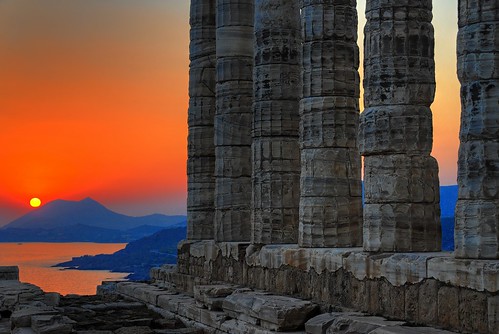
If you are not planning a trip to Mount Athos or to the monasteries of Meteora and want to experience monastic life and Byzantine heritage then a visit to Daphni Monastery &/OR Monastery of Kaisariani may be enlightening. The Temple Of Poseidon (Cape Sounion)This excursion is highly recommended for the journey through the coastal route, the magnificent ruins amidst dramatic & spectacular scenery and the brilliant views of the Aegean Sea especially during sunset. But be prepared to be engulfed by the tourist buses and their loads of tourists. If you want peace and solitude its best to reach it in the early hours of the morning definitely before 10 am (maybe earlier to catch the rising sun :))Marathon – A keen marathon runner, sports buff with an interest in ancient history or simply want to experience some beautiful beaches then Marathon can be on your itinerary.
Daphni Monastery
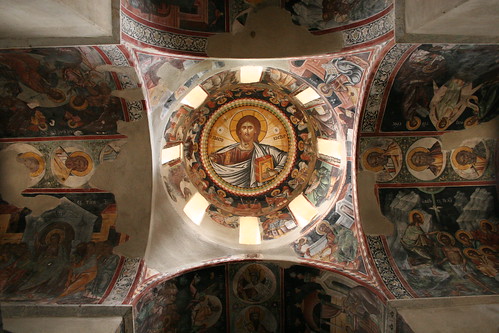
Located just outside of Athens, almost half-way along the ancient Sacred Way to Eleusis, the Daphni (also Dafni) Monastery is an 11th-century Byzantine monastery. The monastery is founded on an ancient sacred site which in Antiquity had a sanctuary of Apollo. (The name Daphni, derived from daphnai (laurels) sacred to the god). The first monastery that succeeded the sanctuary was erected in the 6th century and was enclosed by strong defensive walls, almost square in plan. The second phase, dated around 1080 AD, is the one preserved. Now a museum and World Heritage Site, it is considered one of the great masterpieces of the Byzantine architecture. The monastery's classic Greek-cross-octagon design is a refinement of a plan first used at Osios Loukas, on the road to Delphi. Its mosaics are considered among the great masterpieces of the Middle Ages. More information: http://www.culture.gr/h/2/eh251.jsp?obj_id=1514

Monastery of Kaisariani
The Byzantine fortified Monastery of Kaisariani is nestled amongst cypress, pine cedar and almond trees in a peaceful location. From Kaisariani Monastery A fifeteen minute drive on A narrow 2 lanes road, lead nearly to the top of the mountain from where excellent views of the city of Athens below can be enjoyed. Pre-Chrisitan remains of Roman date are present but the main structure was built in the 11th century AD and dedicated to the Panagea or Virgin Mary. The four columns supporting the dome are from a pre-existing ancient temple that stood on the site. The monastery is cruciform in shape.

Imp Info: Members of both sexes must be adequately dressed for their visit to the monasteries. Since this area is one of the last heavily forested areas around Athens, it is protected and closely supervised and entry is permitted between the 06:00 -19:00 hrs.
How to get to Kaisariani from Athens: Unfortunately no bus goes to the monastery. The closest you can get to is Kaisariani cemetery by bus 224, all but from there it will take you 15 minutes to reach the mountain base & another hour of hiking to reach the Monastery. Hence the best option would be to drive down unless you are an avid trekker. (Source: tripadvisor.com’s Greek destination expert).
The Temple Of Poseidon - Cape Sounion
The Temple of Poseidon at Sounion is the best half-day trip out of Athens. Cape Sounion is an ancient sacred site is 43 miles south of Athens. Standing atop the rugged cliffs with the Aegean Sea crashing below is the Temple of Poseidon, a landmark for seafarers since ancient times.
In ancient times the temple was the last sign of civilization the Athenians saw as they sailed away from home and the first as they returned. The setting couldn’t have been more perfect for building a temple dedicated to the god of the sea. Though the site was inhabited since pre-historic times, "Sounion Hiron" (sanctuary of Sounion) is first mentioned in the Odyssey, as the place where Menelaos stopped during his return from Troy to bury his helmsman, Phrontes Onetorides. The finds of the 7th century B.C. are numerous and prove the existence of organized cult on two points of the promontory: at the southern edge where the Temple of Poseidon was situated, and about 500 metres. to the north east where the Temple of Athena was established. The best way to experience the grandeur of this place is to watch the glorious sunset. The experience is truly uplifting and spectacular. The most important find from Sounion is the 'Sounion Kouros' (nude youth) 7th century BC and is now housed in the National Archaeological Museum.
Reaching Sounion: There are numerous travel agencies that offer a half-day excursion to Sounion. Check www.athensguide.com/agency.html or http://www.fantasytravelofgreece.com/ and go to 'organized land tours'. There is also a bus to Sounion that leaves Mavromateon at the beginning of Alexandras Avenue near Pedion tou Areos Park. The journey takes 2 hrs and costs around 5 Euros. You can also rent a car and drive to Sounion along with the rest of Attika or enjoy the services of George the Famous Taxi Driver of Athens.
IF THERE IS ONE EXCURSION OUT OF ATHENS THAT YOU CAN DO THIS CAN BE THE ONE

Marathon
It is an ancient Greek city-state, celebrated in antiquity as the place where Theseus killed the bull, the site of the battle of Marathon in 490 BC in which, the Athenian army defeated the numerically much superior army of the Persians, is situated on the northeast coast of Attica, 42 km from Athens. It was the birthplace of Herodes Atticus (A.D. 101-177), known for his generosity in financing buildings as the Odeon and Stadion in Athens, the Stadion at Delphi and the Nymphaeum at Olympia. Today’s sporting event of Marathon is drawn from the legend of Pheidippides, a Greek soldier, who was sent from Marathon to Athens to announce the defeat of the Persians in the Battle of Marathon. Apparently he ran the entire distance without stopping, but moments after passing his message he collapsed dead from exhaustion.

Modern day Marathon is dominated by holiday resorts which have developed in recent years, extending from Schiniás by way of Paralía Marathónas (Marathon Beach) and Néa Makrí to Ayios Andréas and Máti. Other natural places of interest would include the Oinoi Ravine, the beautiful artificial Marathon Lake / Dam & the Schinias National Park famous for its marine and bird life. It is also the site of a rare pine forest, one of few in the Mediterranean. The forest extends almost to the water's edge, and is only separated from it, by 12 km(s) of golden sandy beach, stretching around the historic Marathon Bay. The extensive beaches offer good bathing and recreational facilities.

Reaching Marathon:
By Bus - Attica KTEL bus that serves the area can be found at the terminus in Pedion tou Areos in downtown Athens.
Self Drive - you can reach it by car via Marathon Avenue and Attica Highway, via Dionysos Avenue and Pedelis Avenue, or via Lake Marathon and the Athens-Lamia National Road.

The Treasure Chest - National Archaeological Museum of Athens


The National Archaeological museum of Athens houses some of the most important artefacts excavated from archaeological locations across Greece, dating from pre history to late antiquity. It has the richest collection of Greek art, representative of all the cultures that flourished in Greece.

The collections can be classified under the following heads:
  • Prehistoric collection
  • Sculpture Collection
  • Bronze collection
  • Santorini Collection
  • Egyptian Art collection
  • Stathatos collection
  • Pottery & Small Objects
  • Epigraphic Museum

For more information visit the link: http://www.athensinfoguide.com/wtsmuseums/natarchmuseum.htm

The major finds housed in the museum includes:
o Antikythera mechanism
o Nestor's Cup from Mycenae enae
o Mask of Agamemnon
o Dipylon Inscription
o Poseidon of Cape Artemision
o Antikythera Ephebe
o Diadumenos
o Marathon Boy
o Kroisos Kouros
o Collection of Kouros and Kore (sculpture)
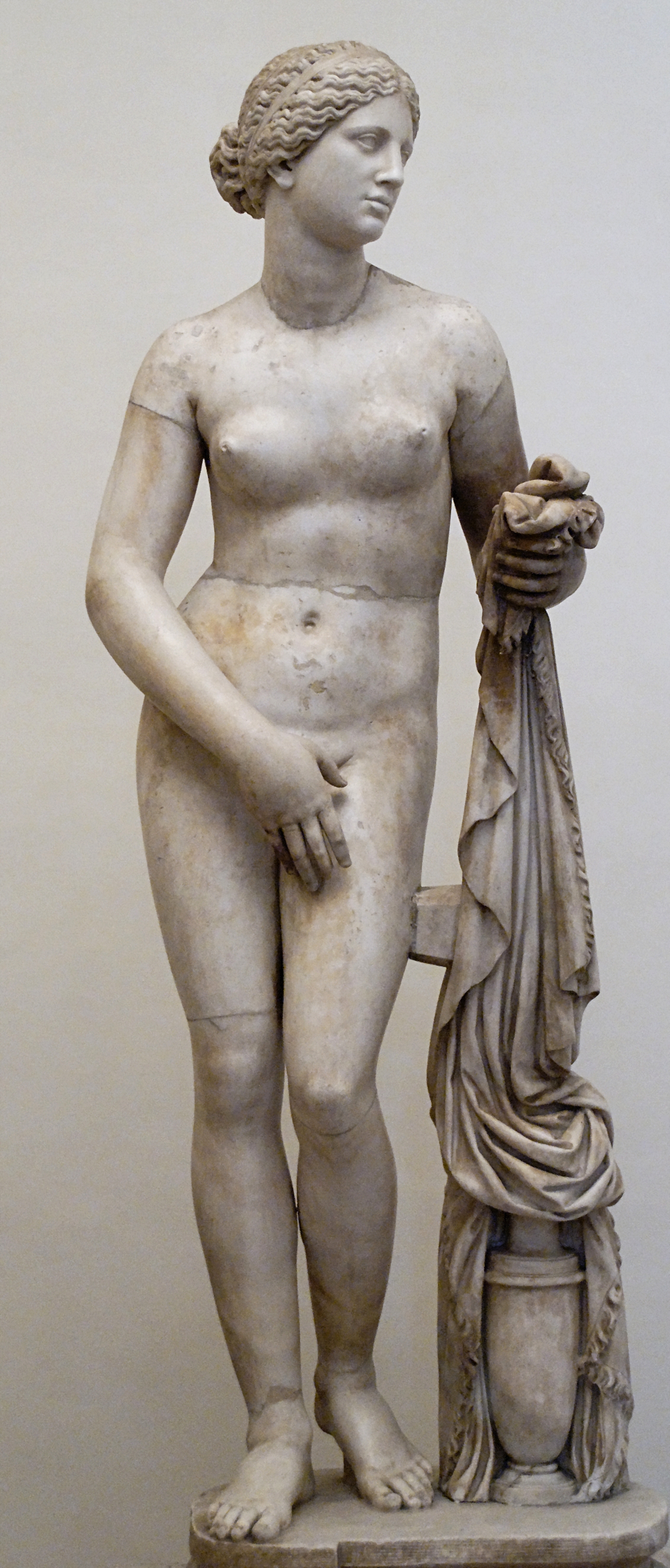
o Aphrodite of Cnidus
o Pitsa panels
o Daidala
o Theseus Ring
o Wall frescoes from Tiryns and Santorini
o Capitoline Venus
o Rhyton in the shape of a bull head

Tuesday, 15 September 2009

Athens - Syntagma Square & National Garden

Syntagma Square
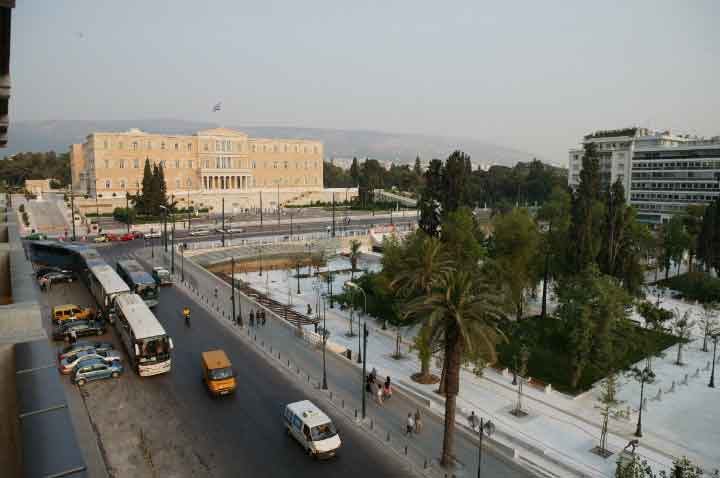
Every city has its own heart in a square, from which arteries in the form of roads reach out to the other important parts. In Athens it is the Syntagma Square.

Syntagma is the Greek word for constitution. It is where Greece’s first constitution was proclaimed by a reluctant King Otto from a palace balcony in 1843. This palace on the eastern side of the square, is now, the Greek Parliament and is guarded by kilted and pom-pommed soldiers - the evzones (ev-zone-ees). Every hour, the changing of the guard ceremony, performed by the Presidential Guard, is conducted in front of the ‘Tomb of the Unknown Soldier’ on the area between the Square and Parliament. On Sundays and official holidays, the ceremonial changing of the guard takes place with an army band and the majority of the 120 Evzones present at 11am. The Parliament building is surrounded by the extensive National Gardens, which are open to the public.

The Square has a long history. It seems every major event in Greece has either been mourned or celebrated here. It has held some of the biggest political rallies that have ever been seen on the planet. The square is still the principal venue for mass demonstration, whether trade unions protests or gatherings of thousands of political party supporters.
The square is also a meeting point for the Athenians and the starting point to a walk to Plaka and Monastiraki Area. It is the heart of the city and many of the main attractions in Athens can be accessed from here:
  • Museum Mile (comprising the Benaki Museum, the Byzantine Museum and the Museum of Cycladic Art)
  • Ermou Street (the city’s most expensive shopping strip)
  • Kolonaki & Lykavitos
  • Psyri & Monastiraki
  • The Acropolis site and other nearby attractions are within walking distance

For more information click:
http://en.wikipedia.org/wiki/Syntagma_Square; http://www.athensinfoguide.com/wtssyntagma.htm; http://www.athensguide.com/syntagma.html

National Garden
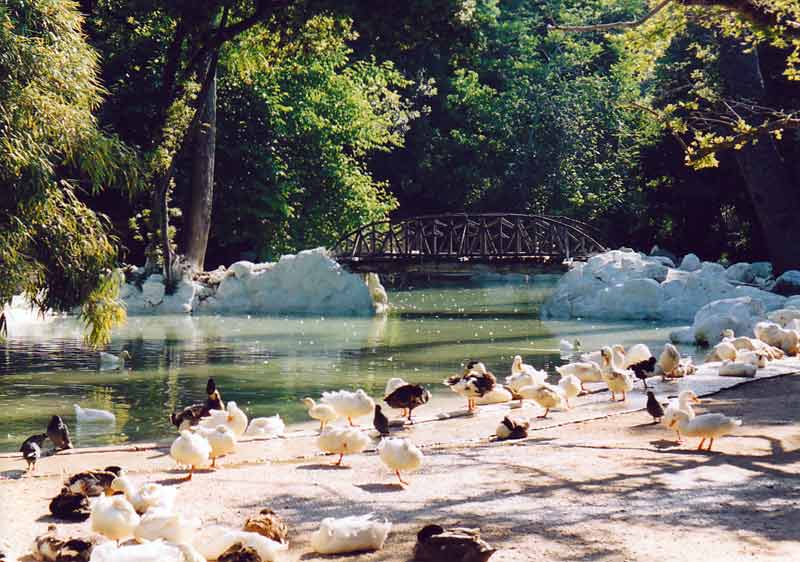
Located behind the Tomb of the Unknown soldier on Amalias street, at the top of Syntagma Square it is a paradise in the middle of the concrete jungle complete with shaded pathways, flowers, trees, duck & turtle ponds and a few reminders of the ancient past. There is also a playground for kids with swings and see-saws.

For more information click http://www.athensguide.com/gardens.html; http://en.wikipedia.org/wiki/National_Garden_of_Athens

Monday, 14 September 2009

Athens & the Hills - Areopagus (Mars Hill); Filopappou (Hill of Muses); Pnyx (Hill of Pnyx)

The Hills of Athens
Most visitors to Acropolis of Athens arrive and leave by the same route through the Plaka. For a increasingly panaromic option its worth taking the time to explore the area to the west of the Acropolis dominated by the Hills.
Areopagus (Mars Hill)
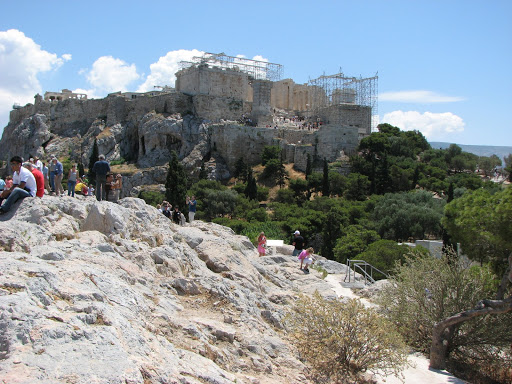
It is a historic hunk of rock found near the entrance to the Acropolis, just above the site of the Ancient Agora. Ares was supposed to have been tried here by the Gods for the murder of Poseidon's son Alirrothios. Aeschylus used this setting in ‘The Eumenides’ for the trial of Orestes who pursued by ‘the Furies’ demand of ‘a life for a life’ for killing his stepmother Clytemnestra and her lover Aegisthus. This served as the site of the homicide court and was the meeting ground of the elders in Ancient Athens. It was used as a campsite by the Persians during their seige of Athens. In the Roman era it was used by Saint Paul who preached the ‘sermon of an unknown God’ from here. Amognst his many converts was Dionysius who later became the patron saint of the city.
For more information click on: http://www.destination360.com/europe/greece/areopagus-hill.php

Filopappou (Hill of Muses)
The "Hill of the Muses", as it was known in ancient times, is situated within walking distance of Old Athens and offers some of the finest views of Athens (from the Saronic Gulf to the Argolic Hills. Its summit is capped by a monument to a Roman Senator. Northwest along the main path is church Ayios Dhimitrios and in the cliff-face across to the south there is a kind of cave dwelling known as the Prison of Socrates. It also shares some negative history. The shell that destroyed the roof of the Parthenon was lobbed from here. In 1967 during the coup, tanks were placed by the military on its slopes and in recent times this place is best avoided at night as there have been quite a few instances of crime. For more information click on: http://www.athensinfoguide.com/wtsphilopappou.htm

Pnyx (Hill of Pnyx)
To the west of the Acropolis, the Pnyx is a rocky hill surrounded by parks. In ancient Athens this was used as the site for the gathering of the Democratic Assembly. It was literally the cradle of democracy, the Athenians used to gather here to discuss political issues and to take decisions on the future of their town. Later with the growth of Athens the Assembly was shifted to the Theatre of Dionysos. Apart from the platform of the Pnyx, other ancient remains include two large stoas, built to shelter people in case of bad weather, the altar of Zeus Agoraios and the sanctuary of Zeus Hypsistos. Beyond the Pnyx lies ‘Hill of Nymphs’ dominated by an observatory & gardens. For more information click on: http://en.wikipedia.org/wiki/Pnyx

Neighbourhoods of Athens - Fashionable Kolonaki & breathtaking Lykavittos Hill

Kolonaki
It is Athen’s most fashionable neighbourhood and home to much of the country’s aristocracy. Shopping in Kolonaki can be an experience if money is not an issue. The streets are lined with posh designer outlets (of both national and international fame), gourmet delights, and the regular upscale cafes and bars. It is within easy walking distance from the Syntagma Square. From the National Gardens in Syntagma Square, cross Vassilias Sophias street, continue up the hill from Irodou Atikou past the Benaki Museum, to reach Kolonaki Square.

In Kolonaki you will find the Lykavittos Hill from where a funicular takes you up to some spectacular, unparalleled views of the city. For the energetic, walking can be an option; others may find the ride up in the funicular easier, there is also a third option of taking the taxi up. There is a restaurant with an open terrace that offers an excellent view of Athens. On the back side of the mountain is an outdoor amphitheatre. The back page of the Athens News can update you with who's playing. It's reported to be one of the finest places to see a concert and stalwarts from Leonard Cohen to Peter Gabriel seems to have performed here. There is a also a small, simple & whitewashed chapel that also can be explored.


A visit to this part of the city is worth it for the views alone, especially to catch the last rays of the setting sun. Located in the centre of the city the Lykavittos Hill rises to a height of 910 feet. From the summit you will be rewarded with a captivating view that stretches to the ships in Piraeus, the Aegean Sea, and on a clear day the islands beyond, all the way to the mountains of the Peloponnese.

For more information click on: http://www.athensguide.com/kolonaki.htm

Museums & Galleries (in Kolonaki): There are a few galleries and several museums here out of which the following are noteworthy

The Benaki Museum - The country’s oldest privately owned museum showcasing everything Greek, from ancient Paleolithic and Neolithic relics to Roman& Byzantine and Ottoman artefacts. It also showcases Islamic & Folk Art. For more information click: http://www.benaki.gr/; http://en.wikipedia.org/wiki/Benaki_Museum;

Museum of Cycladic Art – The museum houses approximately 3 000 objects of Cycladic, Ancient Greek and Cypriot art. It is dedicated to the study and promotion of ancient cultures of the Aegean and Cyprus, with special emphasis on Cycladic Art of the 3rd millennium BC. For more information click: http://www.cycladic.gr/; http://en.wikipedia.org/wiki/Goulandris_Museum_of_Cycladic_Art

The Byzantine Museum - The 25,000 collections trace the course of Greek art from the 4th to the 19th century. They comprise collections of Byzantine and post-Byzantine ikons, Sculptures, Manuscripts, Wall paintings, Mosaics, Small objects (cloth, coins, pottery, metal objects, silver), Wood carvings, Patterns (anthibola), Bronze Engravings, Lithographs, Old Prints (incunabula). It is one of the most notable musuems in the world for Byzantine Art. For more information click: http://www.byzantinemuseum.gr/

The History Museum of Greek Costume - It houses over 25,000 items featuring displays of Greek regional costumes, ornaments, copies of Minoan, Classical and Byzantine costumes, as well as china dolls dressed in Greek costume. For more information click: http://www.athensinfoguide.com/greekcostume.htm

Accommodation: Kolonaki offers excellent options for luxury hotels often accompanied by views of the Acropolis or Lykavittos Hill. For a more affordable lodging option, renting a studio or apartment in the neighbourhood can be worthwhile, as these are fairly priced and are comfortable enough.

Neighbourhoods of Athens - White-washed Anafiotika & Exciting Psyri

Anafiotika
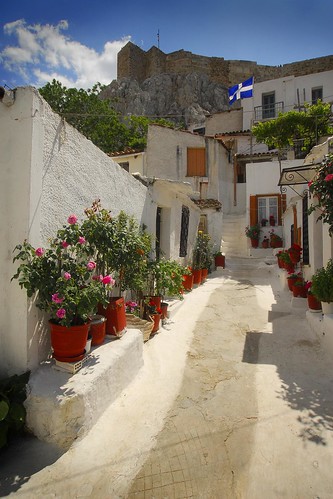
It is a very visually interesting cluster of small houses built on the slopes of the Acropolis above the Plaka. It's named Anafiotika because the original inhabitants were stone masons who came from the island of Anafi in the mid 19th century, to build Athens. They built their houses on the steep slopes of the Acropolis in their traditional island style. Thus, they created a small village with white-washed houses and narrow paths between them. Hence it looks like a typical Greek island without the sea!!

For more information click on http://www.athensinfoguide.com/%20Anafiotikafiotika


Psiri
It is the small neighbourhood in downtown Athens that is directly adjacent to Plaka. It is the place for good food and nightlife But walking through Psiri during daytime you will notice that the streets are filled with working class people and contains a variety of shops and businesses that might be described as practical or business oriented, from type-setters, to fixtures, and material goods for making clothing. The only clues that the area is a hotbed of nightlife are the cafes and restaurants storefronts that look like they have been closed for years and the new shops and boutiques. If you were wandering through the neighbourhood you might stop and wonder what a state-of-the-art climate-controlled shop selling Cuban Cigars is doing in an area of workshops and small factories. At around 6pm, Psiri undergoes the transformation from a working-class industrial area, to a mecca of cafes, bars, restaurants and eateries. The streets get filled with tables and chairs and what were parking lots during the day become dramatically lighted outdoor dining areas for restaurants. Each restaurant has its own style, from traditional Greek taverna to 60's style cafes that may remind you of a luncheonette in an old movie. Many are decorated with historic photos of Athens and some with relics of our modern society.


For more information click on http://www.athensguide.com/psiri.html

Athens - Ancient Agora, Arch of Hadrian, Temple of Olympian Zeus

Ancient Agora of Athens
It started as a residential area, but in the 6th century BC, Peisistratus converted it into a centre of Athenian government with a newly built drainage system, fountains and a temple to the Olympian gods. In the 5th century BC there were temples constructed to Hephaestus, Zeus and Apollo. Public meetings, such as those to discuss ostracism, were held in the Agora. During the period of radical democracy (after 509 BC), the Agora was the meeting point of the city council, the presidents of the council, and the magistrates. The Agora was the place where every Athenian citizen gathered to conduct their business, participate in their city's governance, decide judicial matters, express their opinion for all who cared to listen, and elect their city officials. For every free Athenian citizen, participating in such "common" activities was not merely a duty, but instead it was a privilege and an honor. The law courts were located there, and any citizen who happened to be in the Agora when a case was being heard, could be forced to serve as a juror. The Agora in Athens again became a residential area during Roman and Byzantine times. Today there are only three intact monuments in this site:
  1. Eleventh Century Church which though very recent given the age of the Agora, still worth a visit for the Byzantine frescoes, art and architecture.
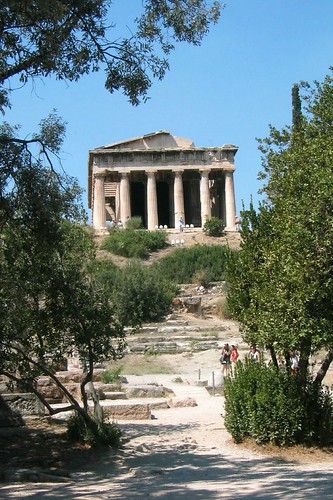
  2. Temple of Hephaistos - It’s one of the few temples which has survived the centuries intact. Even the frieze has survived in its original position in a remarkably complete condition. (Pic 2)

  3. The Stoa of Attalos - rebuilt by archeologist in the 1950s to serve as the Agora’s museum.

Hence to achieve a sense of accomplishment and gain a fair understanding of the site it is vital to

  • Have a map of the ruins. It will help you to understand what lies in front of you. You can click on the link http://en.wikipedia.org/wiki/File:AgoraAthens5thcentury.png for the same.
  • Better still get a copy of Lonely Planet to make sense of the rock debris and aquaint yourself with what stood at the site years ago so as to enable the flow of imagination
  • Have the ability to appreciate history

Do understand that when you walk through the rubble you will be passing monuments like

  1. Heliaea - It was the supreme court of ancient Anthens and the scene of famous trials Trial of Socrates and the Trial of Pericles

  2. Metroon (Old Bouleuterion) – the meeting chamber of the city council till the new Bouleuterion was built post which it was dedicated to the mother goddess.

  3. New Bouleuterion – It housed the council of citizens in Ancient Greece

For more information click on the following links: http://en.wikipedia.org/wiki/Ancient_Agora_of_Athens; http://www.stoa.org/athens/sites/agoraguide4/


The Arch of Hadrian
It is a monumental gateway built to celebrate the visit of Roman Emperor Hadrian. The arch was built over the line of an ancient road.
For more information click on the following link(s)
http://en.wikipedia.org/wiki/Arch_of_Hadriana.org/wiki/Arch_of_Hadrian; http://www.stoa.org/athens/sites/archofhadrian/source/d000130005.html


Temple of Olympian Zeus
Dedicated to Zeus, king of the Olympian gods the construction of the temple began in the 6th Century by Peisistratos and was not finished till the next 700 years. The Roman emperor Hadrian completed it in 131 AD. During the Roman periods it was the largest temple in Greece and housed one of the largest cult statues. Today the massive ruins do give us an idea of the magnitude of this project.
For more information click on the following link(s)
http://en.wikipedia.org/wiki/Temple_of_Olympian_Zeus_(Athens)

Saturday, 12 September 2009

Neighbourhoods of Athens - Gloriously old Plaka & Monastiraki (Flea-Market)

In the shadow of the Acropolis, the Plaka is the oldest section of Athens. It is a gloriously exotic labyrinth of alleys, winding streets and stairs, lined with 19th century neo-classical houses and mansions with beautifully decorated tiled roofs. Plaka district is almost completely pedestrianised and contains the famous flea market around Monastiraki Square, ancient sites and small museums of traditional and popular culture. Everywhere you look in the Plaka there is evidence of some past civilization, Greek, Roman or Ottoman Turkish. Amidst the history is a colourful medley of restaurants, jewellery stores, tourist shops, cafes, musicians, flower sellers, photographers, bead-sellers and people who write name on a grain of rice. But it is not only tourists who favour it, Greeks also hang out here. In Athens, it is the best place to go on a sunny afternoon to sit on one of the many pavement cafes and see the world go by.
There are two main streets: Kydatheneon and Adrianou. Kydatheneon begins at Nikis street, which is one block down from Syntagma Square. Adrianou begins in the Monastiraki flea market but disappears in the Roman Agora before reappearing behind the wall of Hadrian's Library and Plaka Square. Adrianou and Kydatheneon connect about a quarter of a mile up. Once you know these two streets you can wander around and always find your way back.

I found Matt Barretts website the best for understanding Plaka. Its highly informative and includes all that you need to know about, from Jewellery stores for buying 22k gold; shopping for Olympic paraphernalia; institution called Remember; visited by rock stars, actors, fashion designers and models; to more ordinary information about Cafes and the oldest distillery in Athens. Visit http://www.athensguide.com/plaka.html and it will seem that you have just come back from Plaka

Buying the shiny - Gold: It's not the gold souk of Dubai but it can be interesting for Europe where 22k is not common. If you are looking for craftsmanship, keep an eye out for artist owned jewellery stores. They make their own pieces rather than buying it bulk from a factory. Most of the shops deal with 22K gold in a variety of styles, including ancient Greek designs or exact copies.

Monastiraki: Placed under the shadow of Acropolis it is famous for the flea market and is best in early Sunday mornings before the crowd descends and cafes get overcrowded.
Much of the flea market is but a collection of small shops of which most of them are tourist shops with the same stuff you will find across Plaka. But on Sundays it is a flea market with people selling anything from antiques to useless junk. To reach it from Syntagma walk down Metropolitan street, past the Cathedral and the marble square. This is where Pondrossou Street begins which is the high end section of Monastiraki. From Plaka, near the end of Adrianou Street there is a small square dominated by touristy restaurants and cafes. Walk through it till you reach Hadrian's Wall. Turn right and then left, down the tiny Pondroussou Street. You reach the Monastiraki Flea-Market.

Monuments: Overlooking Monastiraki square, and across the street from the metro station is the restored Turkish Mosque housing the acclaimed collection of ceramics of The Greek Folk Art Museum. Right next door are the large columns and ruins of the Roman Emperor Hadrian's Library and the Roman Agora. The entrance to the Ancient Agora is about half way down the block on the left.
  • Mosque of Mehmet the Conqueror: Built to commemorate the visit of Sultan Mehmet around 1458.

  • Medrese: Considered a cursed place by the Athenians it was originally a theological school. During the War of Independence the Turks used it as a prison and a tree for hanging Greek prisoners. In 1919 the tree was struck by lightning, the building was later demolished and now only the door remains.
  • The Roman Agora: Also known as the ‘Market of Caesar and Augustus’ is located on the north side of the Acropolis, and within a short distance of the Greek Agora, with which it was connected by a paved street. An inscription mentions that Julius Caesar and Augustus provided the funds for its construction in the 1st century B.C. The Roman Agora consists of a large, open-air courtyard surrounded by colonnades on all four sides. On the eastern side, there were also a series of shops. On the southern side was a fountain. The main entrance was on the west (Gate of Athena Archegetis), and there was a second entrance on the east, leading up to a public latrine and the ‘Tower of the Winds’. The Roman Agora apparently became the main market of the city, taking over many of the commercial functions of the Greek Agora.

  • Tower of the Winds: Also known as the ‘Tower of the Winds’ because of the personifications of the eight winds carved on the eight sides of the building, it is a tall, octagonal building immediately east of the Roman Agora, designed by the famous astronomer (Andronikos of Kyrrhos) as a water clock on the inside, sundial on the outside, and weather vane on the top.

  • Monument to Lysikrates: Built in 334 BC by Lysikrates, to commemorate the victory of the annual dramatic festival at the theater of Dionysos

  • Library of Hadrian: Built by the Roman emperor Hadrian it is a large, square, walled enclosure with an entrance on the west, located immediately north of the Roman Agora. Inside the complex there was an open air courtyard, with a central pool and garden, surrounded by columns. The eastern end had series of rooms where books were stored and served as reading rooms and lecture halls. Archaeologists note that it was more than a library. It provided the people of Athens with a public square with a garden and pool and a cultural centre that contained works of art, a library, and lecture halls.
Museums & Galleries (in Plaka): There are a few galleries and several museums here out of which the following are noteworthy
  • Hellenic Children's Museum: It can be a very enjoyable educational experience for the young. It is a space designed specially to meet the needs and abilities of children and to support the parents and the teachers who contribute to their development.

  • The Music Museum: A 5,000 volume library, it is one of the most important musical collections in Europe. The museum has 167 Greek stringed instruments and an endless selection of all other types of musical instruments. For more information visit: http://www.greecetravel.com/musicmuseum/index.html

  • The Greek Folk Art Museum: It’s collections include embroideries, wood carvings, jewellery, and other traditional folk art. The highly acclaimed collection of ceramics is housed in a beautifully renovated former mosque at 1 Areos Street on Monastiriki Square. For more information visit: http://www.athensinfoguide.com/The%20Greek%20Folk%20Art%20Museum

  • Frissiras Museum of Contemporary Greek and European Painting: It is a private museum dedicated to modern art in the heart of Plaka. There are some 3,000 paintings and sculptures on display and has works of some of the most renowned Greek artists such as Tsoklis, Moralis, Tetsis, Kessanlis and Psychopedis. European artists represented at the museum include Paladino, Blake and Adami amongst others. For more visit: http://www.frissirasmuseum.com/en/

Friday, 11 September 2009

Athens - Iconic Acropolis, the Evocative Ruins

Standing magnificently above the city these iconic remains are a spectacular sight, offering an in-depth insight into ancient Athens. It is the very symbol of Athenian democracy and the pinnacle of artistic supremacy achieved by Athens in the 5th century BC. Today Acropolis is a UNESCO World Heritage site comprising of several highly distinguished ruins that were built over different historical periods. (Evidence suggests that Acropolis was inhabited from as early as the Neolithic period. Over the centuries, it was continuously used as a cult place or as a residential area or both). The ruins of interest in this archaeological site are:

1. Beule Gate: In the middle of the third century AD the Romans built a more dramatic ramp that guided the visitors towards the entrance of the Acropolis by first passing the arched Roman entrance, in a zigzag fashion. This still remains the access point for the modern world and is named Beule Gate after the French archaeologist who investigated this area in 1852.
2. Temple of Athena Nike: The Classical temple, dedicated to the goddess of victorywas designed by architect Kallikrates and built in 426-421 BC.
3. Propylaia: The monumental gateway leading to the entrance of the Acropolis was designed by the architect Mnesikles and constructed in 437-432 B.C. In ancient times one approached it through an inclining ramp that led visitors straight through the steps in front of the Propylaia. Later, the Romans built a more dramatic ramp that guided the visitors up towards the entrance of the Acropolis in a zigzag fashion.
4. Sanctuary of Brauronian Artemis: Located south of the Propylaia inside the Acropolis and was a shrine dedicated to, Brauronian Artemis, protector of women about to give birth, and who had just given birth. It was founded in the mid-sixth century BC.
5. Statue of Athena Promachos: A gigantic statue of Athena, created by Pheidias, placed strategically so as to be encountered first, as one entered through the Propylaia. The colossal bronze statue is lost, but parts of the marble base remain. According to the preserved inscription, it measured about 30 feet (9 m) high. It depicted Athena standing with her shield, resting upright against her leg, and a spear in her right hand. Historical documentation suggests that it was so gigantic that ships approaching the coast of Attica could see Athena’s spear.
6. Old Temple of Athena: An Archaic temple, often dated to 510/500 BC, was the shrine of Athena Polias, the patron deity of the city of Athens. It was located at the centre of the Acropolis plateau, between the Erechtheion and the Parthenon.
7. The Parthenon: Dedicated to Athena, the patron goddess of Athens, is the most evocative of all the ruins in Acropolis. It is the one of the finest surviving monuments of ancient Greece, in terms of both conception and execution. Constructed at the initiative of Pericles, it has stood atop the Acropolis for nearly 2,500 yrs and has functioned not only as a Greek temple, but also has been a treasury, a fortress, a church, and a mosque. Today, it is an icon of ancient Greek architectural brilliance and Athenian democracy.
8. Erechtheion: It is an ancient Greek temple on the north side of the Acropolis is notable for it’s elegant and unusual design.
9. Temple of Rome & Augustus: It was erected in the late first century BC east of the Parthenon.
10. The Acropolis Museum: It is an archaeological museum located in the archeological site of Acropolis and houses all the portable objects removed from the Acropolis since 1834. Due to its limited size, the Greek Government decided in the late 1980s to build a new museum.The major finds housed in the museum includes: Parthenon Frieze, Kritios Boy, Caryatids, Blond Kouros's Head of the Acropolis, Kriophoros, Kouros and Kore, Athena Nike Adjusting Her Sandal, Temple of Athena Nike frieze, Metopes of the Parthenon
11. The Belvedere Terrace: At the northeast corner of the Acropolis was laid out for the royal family in the 19th century, and affords a good view of the city looking towards Syantagma Square and the OldPalace.
12. Odeon of Herodes Atticus: Located on the south slope of the Acropolis this stone theatre with a 5,000 spectator capacity, was built in 161AD by Herodes Atticus in memory of his wife and was used for staging music concerts.
13. Stoa of Eumenes: It is attributed to Eumenes II (197-159 BC.) and was constructed between the theatre of Dionysos and the Odeion of Herodes Atticus and it ran along the "peripatos", (the ancient road around the Acropolis).
14. Sanctuary of Asclepius or Asclepieion: A healing temple, were pilgrims flocked in the hope of being healed. The Asclepieion located on the southern slopes of the Acropolis of Athens dates to around 420 BC.
15. Theatre of Dionysus Eleuthereus: Dedicated to Dionysus, (the god of plays & wine) it is the birthplace of Greek tragedy. In Classical Athens, it was the venue for the Greater Dionysia, competitions were held between Greek dramatists as part of the occasion. Sophocles, Euripides, Aristophanes and Aeschylus had staged their plays as part of the competitions here. An open air theatre with a seating capacity of 17,000 people, built at the foot of the Acropolis of Athens, it surely is much grander than the Odeon of Herodes Atticus. The remains of a restored and redesigned Roman version can still be seen at the site today.
16. Odeon of Pericles: Although no longer standing, recent excavations have revealed that it was situated next to the Theatre of Dionysus, on the south slope of the Athenian Acropolis and was constructed between 446-442 BC. The Odeon was used for theatrical performances and poetry readings, and might have accommodated political and philosophical lectures.

For a detailed map of the ruins visit the link: http://www.athensguide.gr/pop/acropolis.html
For more information visit the following link(s): Hellenic Ministry of Culture/ Acropolis; http://en.wikipedia.org/wiki/Acropolis_of_Athens